

Introduction
Deciding to pursue an Autism Diagnosis for Children in Perth is a significant step, and most parents approach it with a mix of hope, uncertainty, and a genuine wish to understand their child better. Knowing exactly what the process involves, from the very first appointment through to the final report, can make that step feel far less daunting. This guide walks families through the autism diagnostic journey at WA Paeds, stage by stage, so you know what to expect at every point along the way.
Step One: Recognizing the Signs Worth Assessing
Autism presents differently in every child, but common signals include reduced eye contact, delayed or unusual language development, strong preferences for routine, intense or narrow interests, sensory sensitivities, and difficulty reading social situations or forming friendships. Some children show clear signs from infancy, while others — particularly girls and children with strong verbal skills — are not identified until later in childhood. If you have noticed a pattern of these signs, or if your child’s school has raised similar concerns, that is a reasonable basis to seek an assessment.
Step Two: The Initial Consultation
The process begins with a comprehensive conversation between the paediatrician and parents. This covers your child’s development from pregnancy through to the present, family history, and specific examples of the behaviours or difficulties you have noticed. This conversation shapes the rest of the assessment and ensures the clinical team understands your child as an individual, not just a checklist of symptoms.
Step Three: Structured Observation Using the ADOS-2
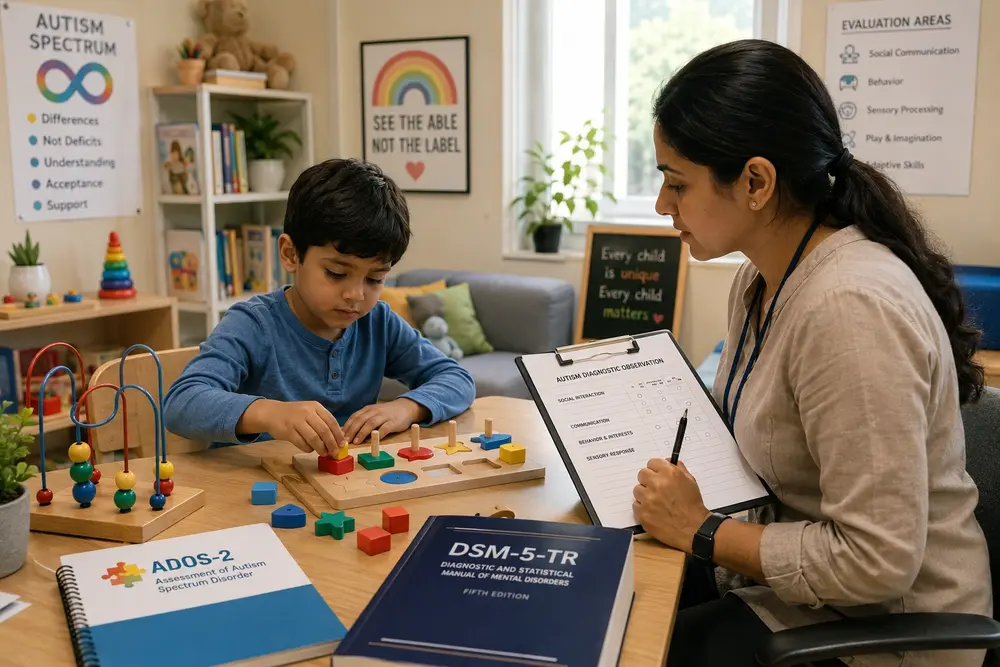
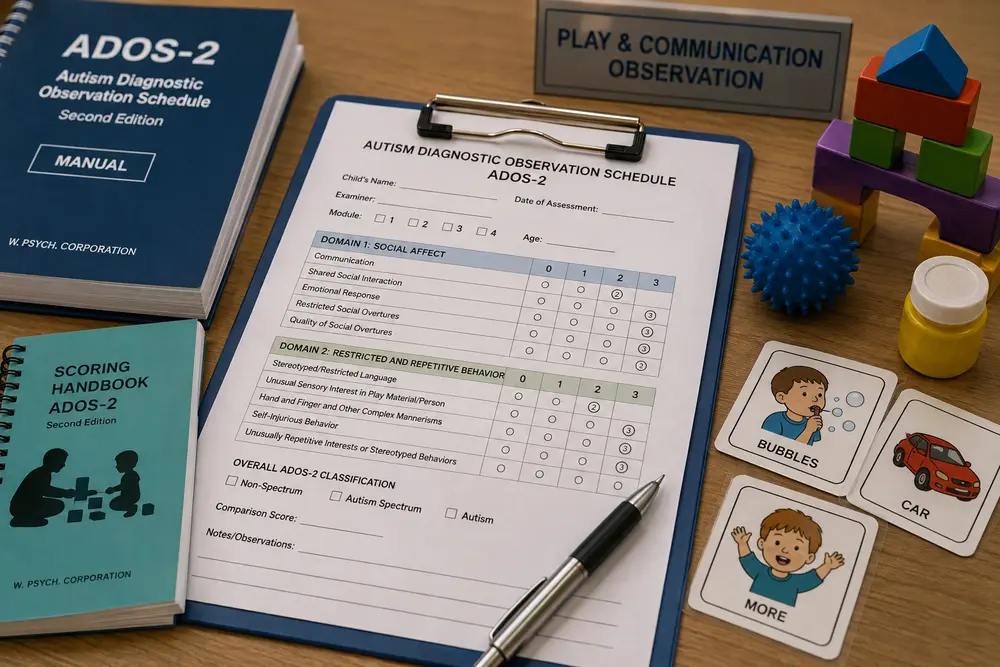
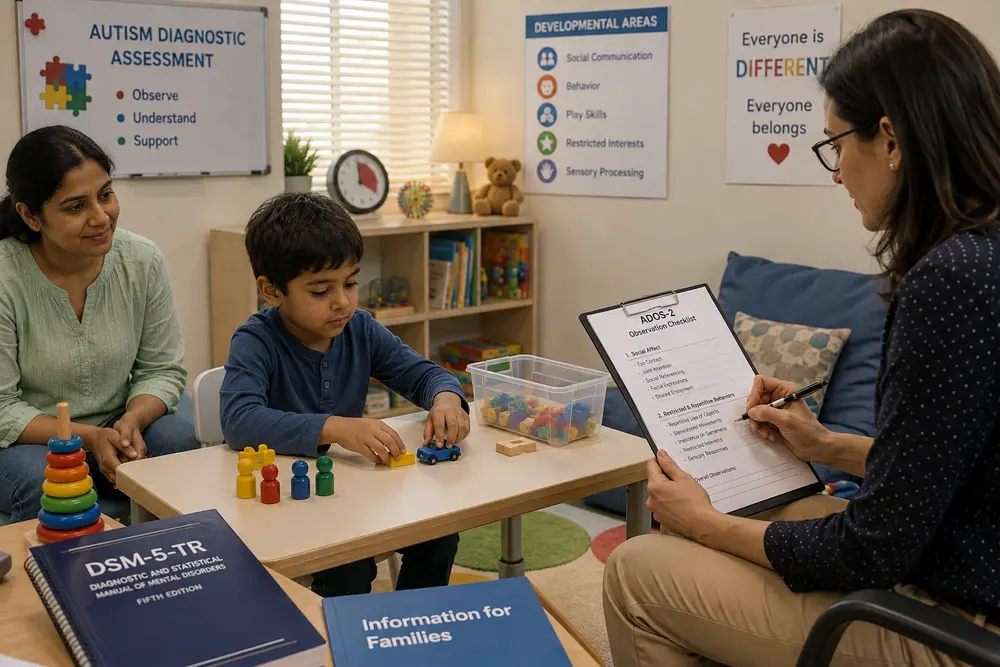
The Autism Diagnostic Observation Schedule, known as the ADOS-2, is the internationally recognized gold-standard tool for autism assessment. It involves structured activities designed to create natural opportunities for social interaction, communication, and play. The assessor observes how your child engages, communicates, and responds throughout these activities, producing standardised, objective evidence that supports the diagnostic decision.
Step Four: Multi-Source Information Gathering
Parents and teachers complete standardised questionnaires that capture how your child’s behaviour and social communication present across different environments. This step matters because autism can look quite different at home compared to school, and a complete picture requires input from more than one setting.
Step Five: Cognitive and Adaptive Assessment
Where relevant, additional testing evaluates your child’s cognitive profile and everyday functional skills. This adds important context, helping the clinical team understand not just whether autism is present, but how it interacts with your child’s broader strengths and needs.
Step Six: Feedback and Diagnosis
Once all information has been gathered and reviewed, WA Paeds provides a detailed feedback session where the paediatrician explains the findings clearly, answers your questions honestly, and discusses what the diagnosis means for your child specifically. A comprehensive written report follows, documenting the diagnostic conclusion and outlining recommended next steps.
Why Getting a Formal Diagnosis Still Matters
Autism diagnosis rates among Australian children have risen significantly over the past decade, and funding pathways connected to diagnosis continue to evolve. Some upcoming policy changes aim to make early support more accessible for young children even before a formal diagnosis is confirmed. Even so, a thorough clinical diagnosis remains valuable well beyond funding access — it gives your child, your family, and their school an accurate, individualised understanding of their strengths and needs that a general developmental screen cannot provide. A proper diagnosis also distinguishes autism from other conditions that can look similar on the surface, ensuring your child receives support that actually matches their profile.
What Comes Next for Your Family
Following diagnosis, families typically begin exploring NDIS funding, speech pathology, occupational therapy, and social skills support tailored to their child’s specific needs. WA Paeds provides the diagnostic documentation required for these applications and can guide you through the early steps of accessing support in the Perth area.
Common Myths That Delay Assessment
A few persistent myths keep families from seeking assessment sooner than they should. Some parents believe autism can only be identified in very young children, when in fact many children — particularly girls and highly verbal children — are diagnosed well into primary school or even adolescence. Others worry that a diagnosis will limit how their child is treated at school, when in practice a diagnosis usually opens the door to more tailored, effective support rather than less. There is also a common misconception that assessment is only worthwhile if a family plans to pursue NDIS funding. Even without funding as the goal, a formal diagnosis gives parents, teachers, and therapists a shared, accurate understanding of a child’s needs that guesswork simply cannot provide.
Conclusion
An Autism Diagnosis for Children in Perth through WA Paeds is a thorough, step-by-step process designed to give your family clear, individualized answers. Contact WA Paeds today to begin the autism diagnosis journey for your child — understanding your child’s unique profile is the first step toward giving them the right support.