


Introduction
Getting an ADHD Diagnosis in Perth is often the single most useful step a family can take when a child is struggling with attention, impulsivity, or emotional regulation at home or school. Yet many parents delay seeking a diagnosis because they are unsure what the process involves, how long it will take, or what actually changes once a diagnosis is confirmed. This blog walks through the realistic journey to an ADHD diagnosis, why timing matters, and what families can expect once the process at WA Paeds is complete.
Why the Diagnosis Journey Can Feel Overwhelming
Recent national research into ADHD assessment access in Australia paints a sobering picture. Studies tracking wait times have found that children referred for ADHD assessment can wait around 19 weeks on average for an initial appointment, with some families waiting considerably longer depending on where they live and which specialists are available locally. Costs can also add up quickly, with full assessments sometimes reaching into the thousands of dollars once all appointments are included. Workforce shortages in child psychiatry and paediatrics mean that families in many parts of the country are competing for a limited number of specialist appointments.
This context matters because it explains why so many parents feel stuck — not because their concerns are not valid, but because the system itself creates real barriers. Choosing a paediatric clinic that specializes in ADHD assessment and manages the process efficiently, like WA Paeds, can make a genuine difference to how quickly your family gets the answers you need.
What an ADHD Diagnosis Actually Requires
An ADHD diagnosis is not based on a single conversation or a quick checklist. A proper diagnosis follows recognized clinical criteria and requires evidence that symptoms are present across more than one setting, have been present for a meaningful length of time, and are significantly affecting the child’s functioning at home, school, or socially. This is why the process includes structured input from both parents and teachers, not just a parent’s description of behaviour at home.
The Assessment Process at WA Paeds
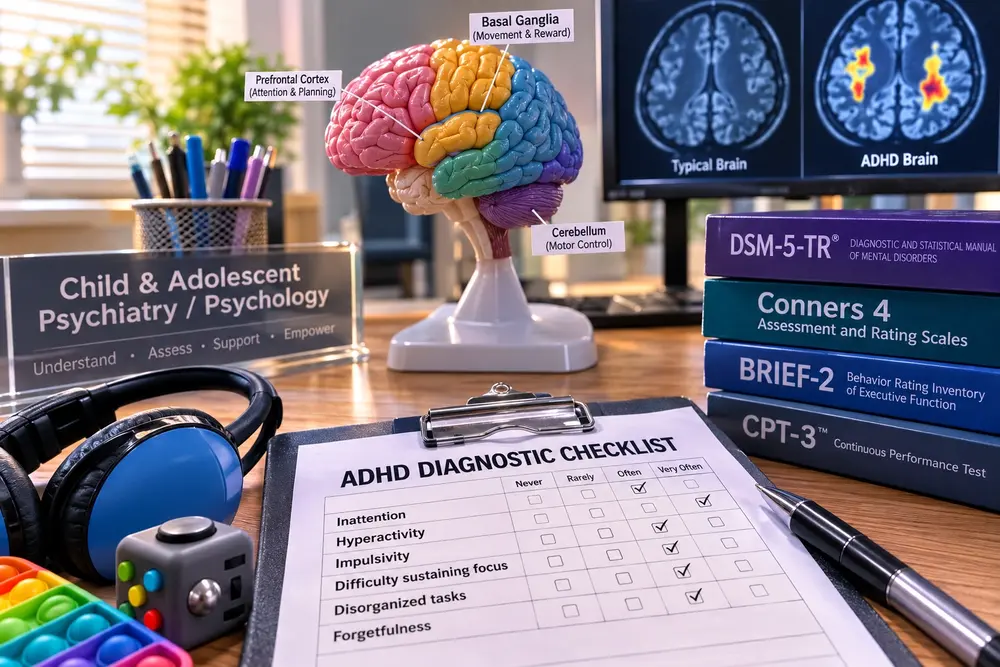
The path to an ADHD diagnosis at WA Paeds includes several key components working together to build an accurate clinical picture.
- Developmental history: A detailed conversation covering your child’s early development, family history, and the specific concerns that have brought you in.
- Standardised rating scales: Validated questionnaires completed separately by parents and teachers to compare how symptoms present across different environments.
- Cognitive testing: Direct assessment of working memory, processing speed, and attention, which provides objective evidence beyond behavioural reports.
- Medical review: A check for other conditions — such as sleep problems, vision or hearing issues, or anxiety — that can produce ADHD-like symptoms.
- Clinical formulation: The paediatrician brings all of this information together to reach a diagnostic conclusion based on established criteria, not assumption.
What Happens After Diagnosis
A confirmed ADHD diagnosis opens several practical pathways for your child. Schools can put targeted classroom adjustments and support plans in place once they have a formal diagnosis and report to work from. Families gain access to therapeutic supports such as occupational therapy or psychology, tailored specifically to the child’s ADHD profile rather than generic strategies. The paediatrician will also discuss whether medication is an appropriate option to consider, walking you through the evidence, the alternatives, and what a trial would involve if you decide to pursue it. Importantly, a diagnosis also gives your child language for understanding themselves — replacing labels like “lazy” or “difficult” with an accurate explanation of how their brain works.
Common Questions Parents Ask Before Diagnosis
Many parents wonder whether their child is too young, too old, or “not bad enough” to warrant assessment. ADHD can be diagnosed from the preschool years through to adulthood, and there is no threshold of severity a child needs to reach before assessment is worthwhile. If ADHD is affecting your child’s learning, friendships, or family life in ways that concern you, that is reason enough to seek an assessment.
Related blog – What Happens After an ADHD Diagnosis in Perth: A Parent’s Roadmap
How to Prepare Your Family for the Assessment Process
A little preparation makes the whole process smoother. Start keeping brief notes on specific examples of the behaviours that concern you — a difficult morning routine, an unfinished homework task, a meltdown after school — rather than relying on memory during the appointment. Gather any school reports or teacher comments you already have, since these often contain useful observations even if ADHD was never mentioned directly. It also helps to talk to your child’s teacher beforehand, letting them know an assessment is underway so they are prepared to complete the rating scales when they arrive. Finally, try to manage your own expectations about timing. Because the process involves multiple appointments and input from several sources, rushing it does not produce a more accurate result — a properly paced assessment gives the paediatrician the complete picture needed for a reliable diagnosis.

Conclusion
An ADHD Diagnosis in Perth from WA Paeds gives your family clarity, backed by thorough clinical evidence rather than guesswork. While national wait times and costs can feel discouraging, choosing an experienced paediatric clinic makes the path forward far more manageable. Contact WA Paeds today to begin the ADHD diagnosis process and take the first step toward understanding and supporting your child.