

Introduction
Parents are frequently told that their child has a “learning difficulty” at school, without ever being told whether this means something temporary and manageable, or something more significant that requires a formal diagnosis. The two terms are often used loosely and interchangeably, which leaves families confused about what is actually happening and what to do about it. A Learning Difficulties Assessment in Perth at WA Paeds exists precisely to answer this question with clinical clarity, rather than leaving families to guess.

What “Learning Difficulty” Usually Means
In everyday school language, a learning difficulty is a broad, informal term used to describe any child who is finding a particular area of the curriculum harder than expected. This can result from many different causes: a temporary gap in foundational skills, inconsistent school attendance, anxiety affecting concentration, a mismatch between teaching style and the way a child learns best, or simply a period of slower development in one specific area. Many children who are described as having a learning difficulty catch up with time, additional practice, or a change in teaching approach, without ever having an underlying neurological condition.
What a Learning Disability Actually Is
A learning disability is a distinct, formally diagnosed neurological condition, such as dyslexia, dyscalculia, or dysgraphia. It reflects a specific difference in how the brain processes certain types of information — reading, numbers, or written expression — that persists despite good teaching, consistent practice, and adequate effort. Unlike a general learning difficulty, a learning disability does not resolve simply with more time or more practice using the same teaching methods. It requires an approach specifically designed around the way that child’s brain processes that particular type of information.
Why the Distinction Matters So Much
Confusing a learning difficulty with a learning disability leads to two very different, and equally damaging, outcomes. If a child with a genuine learning disability is treated as though they simply need more time and more of the same teaching, they will continue to struggle and fall further behind, often developing significant anxiety and a damaged sense of their own ability along the way. Conversely, if a child with a temporary, situational learning difficulty is prematurely labelled with a formal disability, this can create unnecessary worry and, in some cases, unnecessarily narrow the teaching approaches used with them. Getting the distinction right changes the entire support plan that follows.
Signs That Suggest Formal Assessment Is Needed
Certain patterns suggest that what looks like a general learning difficulty may in fact be a specific learning disability warranting formal assessment. These include a struggle that persists despite genuinely good teaching and consistent effort over an extended period, a significant and unexpected gap between a child’s spoken understanding and their performance in reading, writing, or maths, difficulty that is isolated to one specific area while the child performs at an age-appropriate level everywhere else, and a family history of similar learning struggles, which raises the likelihood of an inherited processing difference.
How a Learning Difficulties Assessment at WA Paeds Reaches a Clear Answer
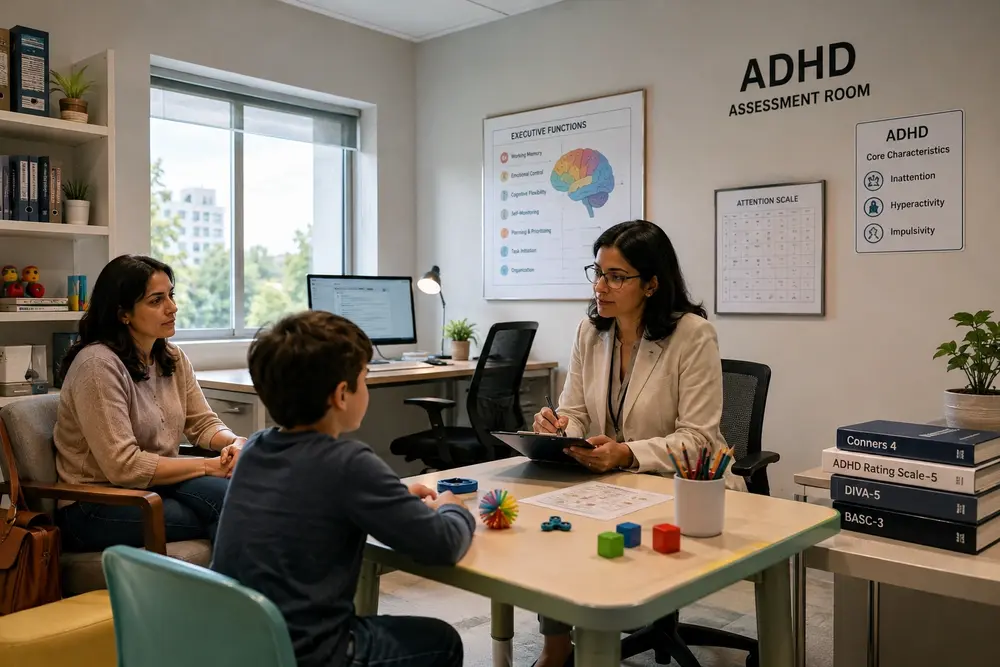
A Learning Difficulties Assessment in Perth at WA Paeds uses standardised cognitive testing to measure a child’s overall reasoning and processing ability, alongside standardised academic achievement testing in reading, writing, and maths. By comparing these two sets of results directly, the assessment identifies whether a significant, unexpected gap exists between what the child is capable of and what they are actually achieving — the specific pattern that distinguishes a genuine learning disability from a general, situational learning difficulty. Developmental history, school reports, and teacher input are also reviewed to understand how the difficulty has developed and responded to teaching over time.
Read more – learning-disability-assessment/
What Families Gain from a Clear Diagnosis
Once the distinction is clarified, everything downstream becomes more effective. If a specific learning disability is confirmed, the school can put in place an Individual Education Plan built around evidence-based approaches for that specific condition, and the family gains access to specialist tutoring and, where appropriate, exam or assessment adjustments. If the difficulty turns out to be more general and situational, families gain reassurance and practical, targeted strategies without the burden of an unnecessary formal label. Either outcome gives the family a clear, accurate direction rather than continued uncertainty.

Conclusion
Understanding whether your child has a general learning difficulty or a specific learning disability change everything about the support that follows. A Learning Difficulties Assessment in Perth at WA Paeds provides the clinical clarity that replaces guesswork with an accurate answer and a genuine plan. If your child’s school has described them as having a learning difficulty and you are unsure what that really means, contact WA Paeds today to book a Learning Difficulties Assessment in Perth and find out exactly what is going on.