


Introduction
Every child has meltdowns, pushes boundaries, and says “no” more often than parents would like. That is a normal part of growing up. But some children seem to struggle far more than others. Their outbursts are bigger, last longer, and happen more often, and nothing seems to help. If this sounds familiar, a Behavioural Assessment for Children in Perth can help you understand what is driving your child’s behaviour. At WA Paeds, a behavioural assessment looks beyond the behaviour itself to find the cause underneath, so support can target the real problem.
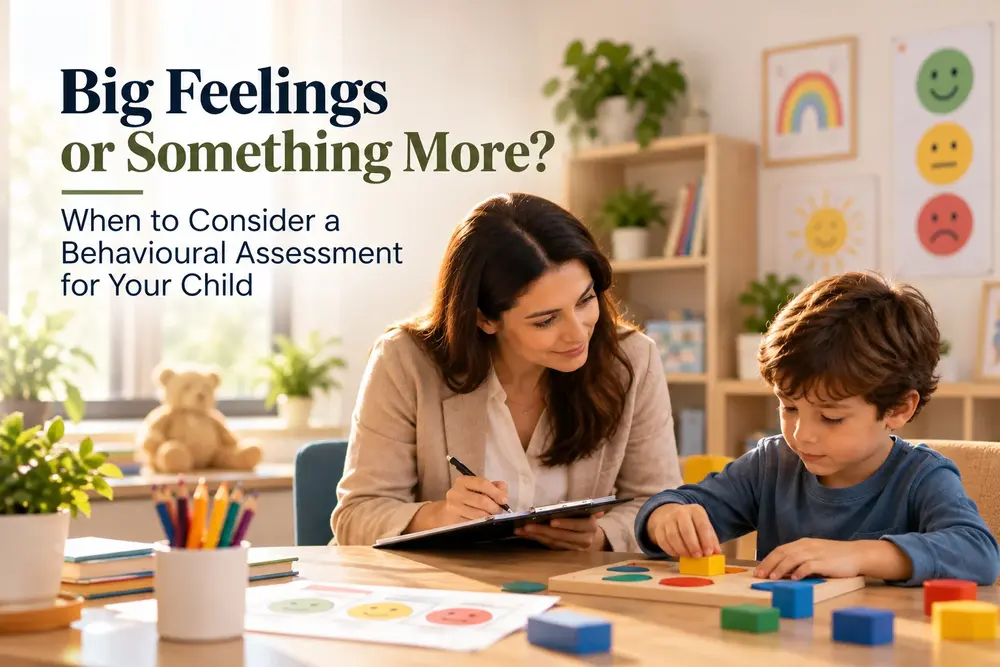
Why Behaviour Is a Form of Communication
Children often show us what they cannot yet tell us. A child who throws their bag across the room after school may be exhausted, overwhelmed, or upset about something that happened in class. A child who refuses to put on their shoes may be reacting to a sensory issue, not simply being defiant.
When behaviour is seen as a message, the question changes from “How do I stop this?” to “What is my child trying to tell me?” A behavioural assessment is designed to answer that second question.
Normal Behaviour vs Behaviour That Needs Attention
It can be hard to know where the line is. These general signs suggest your child’s behaviour may need a closer look:
- Frequency: Outbursts happen most days, not just now and then
- Intensity: Reactions are far bigger than the situation calls for
- Duration: Meltdowns last a long time and are very hard to settle
- Age: The behaviour is well beyond what is typical for your child’s age
- Impact: It is affecting friendships, learning, or family life
- Settings: Problems show up at home, at school, and in other places
If several of these apply and have lasted more than six months, it is worth seeking professional advice.
Common Causes Behind Challenging Behaviour
Challenging behaviour is rarely “just behaviour”. Often, it is linked to something else, such as:
ADHD
Children with ADHD may act impulsively, struggle to wait their turn, and find it hard to control strong emotions.
Autism
Changes in routine, sensory overload, or social confusion can lead to meltdowns that look like defiance but are actually distress.
Anxiety
Anxious children may refuse, argue, or melt down to avoid situations that feel frightening to them.
Learning Difficulties
A child who cannot keep up in class may act out to escape tasks that feel impossible.
Poor Sleep
Tired children often struggle with patience, focus, and emotional control.
Many children have more than one of these factors at once. This is why a careful assessment is so important. Treating the behaviour without knowing the cause often leads to frustration for everyone.
What a Behavioural Assessment Involves
A behavioural assessment at WA Paeds is thorough and family-centred. It usually includes:
- A detailed history: Your child’s development, health, family background, and the behaviours that concern you
- Questionnaires: Rating scales completed by parents and teachers to compare behaviour across settings
- Observation: The paediatrician observes how your child plays, communicates, and responds
- Screening for related conditions: Checking for ADHD, autism, anxiety, learning difficulties, and sleep problems
- A feedback session: A clear explanation of what the findings mean and what to do next
The goal is not to label your child. The goal is to understand them. Many families find that simply having a clear explanation reduces tension at home, because everyone stops fighting the behaviour and starts working on the cause.
It also helps to bring real examples to the appointment. Notes about when outbursts happen, what came before them, and what helped your child calm down give the paediatrician a much clearer picture than memory alone.
Why the End of the Year Can Make Behaviour Worse
Many parents notice behaviour getting harder in November and December. Children are tired after a long school year. Classrooms are busy with concerts, excursions, and changes to routine. Then the holidays bring late nights, visitors, travel, and less structure.
For children who already struggle with regulation, this season can bring their difficulties out more clearly. If the end of the year has been especially tough, it may be showing you something important. Rather than waiting to see if things settle in the new year, use this time to get answers.
Related Blog Post : Common Conditions Identified Through Developmental and Behavioural Assessments
How Families Benefit from Getting Answers
Once the cause of the behaviour is clear, support becomes far more effective. Families often receive:
- Practical strategies that suit their child’s specific needs
- Referrals to psychology, occupational therapy, or speech pathology
- Advice for the school on classroom support
- A plan for managing triggers at home
Parents often say the biggest change is in how they see their child. Instead of feeling that their child is “naughty” or “difficult”, they understand that their child is struggling and needs help to cope.

Conclusion
Big feelings are part of childhood, but when behaviour is constant, intense, and affecting daily life, it deserves a closer look. A Behavioural Assessment for Children in Perth at WA Paeds helps you understand what sits behind your child’s behaviour and what will truly help. If you are tired of trying strategies that do not work, contact WA Paeds today to book a behavioural assessment and start building a calmer, more supported path forward for your child and your family.