

Every parent wants their child to thrive in school, build friendships, and grow in confidence. But for some children, learning comes with persistent challenges that simple encouragement and extra practice cannot fix on their own. Learning disabilities affect how children process information — reading, writing, listening, or working with numbers — and they are more common than many people realise. At WA Paeds, a trusted Pediatric Clinic in Perth, we believe that early identification of these challenges is one of the most powerful things that can happen for a child who is struggling. The sooner a learning difficulty is understood, the sooner the right support can begin — and the greater the difference that support makes over the course of a child’s educational journey.

Understanding What Learning Disabilities Actually Are
A learning disability is not about intelligence. In fact, children with learning disabilities are frequently highly capable, creative, and bright in many areas. The difficulty is neurological — it relates to how specific parts of the brain process certain types of information. This means that a child with dyslexia may be an exceptional verbal communicator but struggle intensely to decode written words. A child with dyscalculia may understand concepts well when explained verbally but be unable to work with numerical representations. A child with dysgraphia may have rich, detailed ideas but be unable to get them onto paper coherently.
The most recognised learning disabilities include:
- Dyslexia — difficulty with accurate and fluent word reading, spelling, and decoding written language
- Dyscalculia — difficulty with numbers, numerical reasoning, and mathematics
- Dysgraphia — difficulty with the physical and cognitive process of writing, affecting handwriting, spelling, and written expression
- Auditory processing disorder — difficulty making sense of sounds and language even when hearing is normal
- Language processing disorder — difficulty attaching meaning to language, affecting comprehension and expression
All of these conditions are neurological in origin. They are not caused by laziness, inattention, poor parenting, or inadequate teaching. They are genuine differences in how the brain is wired, and they respond well to targeted, evidence-based intervention — especially when that intervention begins early.
Why Early Diagnosis Changes Everything
The brain’s capacity to change, adapt, and form new connections is greatest in the early years of childhood. Neuroscientists call this neuroplasticity, and it is the biological basis for why early intervention works so much better than intervention that begins later in life.
When a learning disability is identified and supported during the years when the brain is most receptive to learning, targeted interventions produce significantly greater gains than the same interventions applied later. Research across decades consistently confirms this. Children who receive appropriate support for dyslexia in their early primary years, for example, show reading progress that would not be achievable if the same intervention began in late primary or high school.
Beyond the academic gains, early identification prevents the emotional damage that comes from years of struggling without understanding why. A child who cannot read as well as their classmates and does not know why will often develop explanations that damage their self-concept — they are not smart enough, they are not trying hard enough, something is wrong with them. These narratives, formed in the early years, can persist for a lifetime if they are not replaced with an accurate understanding of a learning difference that has a name, a clear reason, and effective strategies for managing it.
Warning Signs Parents Should Know About
Parents are often the first to notice that something feels different about their child’s learning development. Knowing what signs to watch for at different ages can help parents seek professional assessment at the right time rather than waiting years for the school system to flag the difficulty.
Warning Signs in Preschool and Kindergarten
- Significant difficulty learning the alphabet, recognising letters, or understanding that letters represent sounds
- Trouble rhyming words or recognising when two words rhyme
- Speech that is harder to understand than other children of the same age
- Difficulty following multi-step instructions or remembering sequences
- Very slow development of spoken vocabulary compared to peers
Warning Signs in Early Primary School
- Reading that is consistently slow, effortful, and error-prone despite regular practice
- Frequent letter reversals beyond Year 1, particularly b/d and p/q confusions
- Difficulty sounding out words even after instruction in phonics
- Avoiding reading and writing tasks wherever possible
- Maths skills significantly below what is expected for the year level
- Difficulty copying from the board or from text, even when comprehension is intact
Emotional and Behavioural Signs
- Developing a pattern of school avoidance or frequent physical complaints before school
- Visible frustration, distress, or shutting down during reading or writing tasks
- A significant gap between how well the child communicates verbally and what they can produce in writing
- Declining confidence or a change in attitude toward school and learning
The Assessment Process at WA Paeds
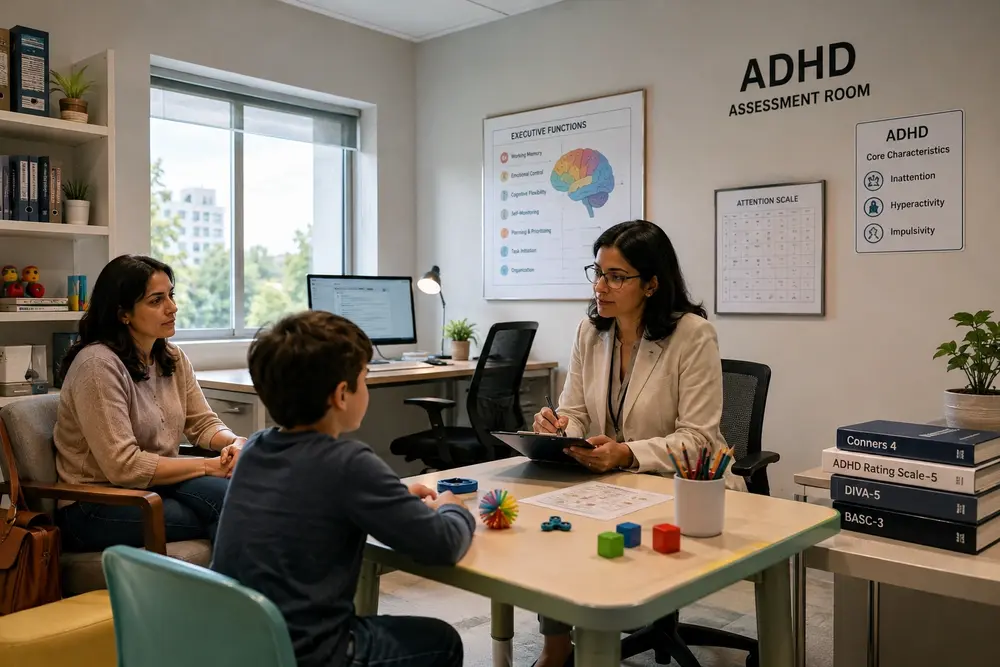
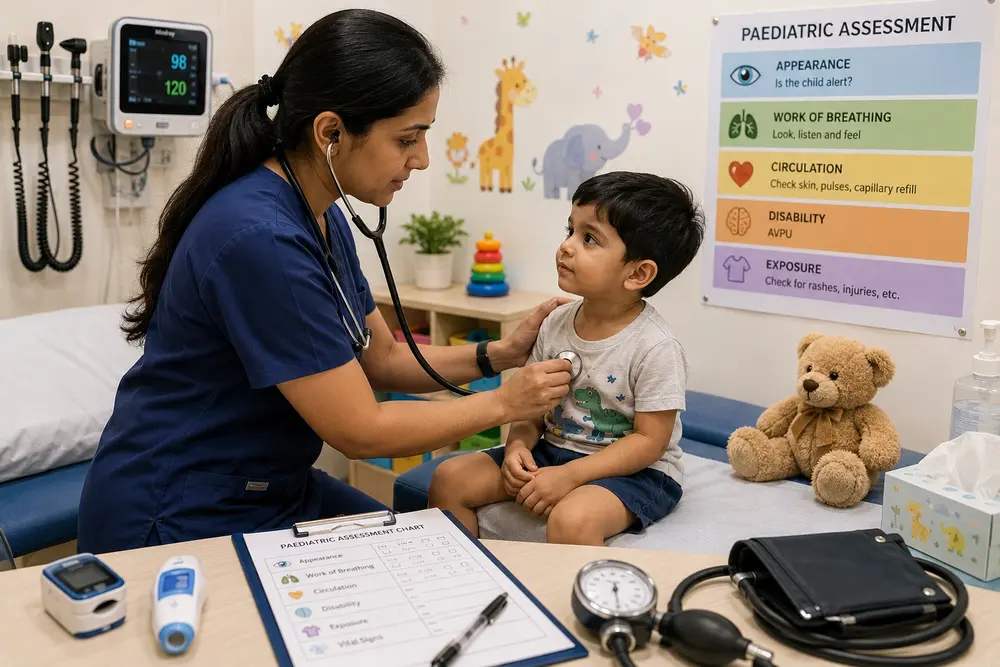
When families bring their child to WA Paeds, a Pediatric Clinic in Perth specialising in child development, the assessment process is comprehensive and collaborative. Our paediatricians work together with psychologists and allied health professionals to build a complete picture of how the child is learning and where the difficulties lie.
A typical assessment includes a thorough developmental history covering the child’s development from birth to now. It includes standardised cognitive and educational testing that measures different aspects of learning, memory, attention, and language processing. School reports and teacher observations are reviewed to provide real-world context. And parents’ own observations — which are often the most valuable data point of all — are given significant weight in the clinical picture.
The outcome is a detailed written report with clear findings, a diagnosis where appropriate, and a set of practical recommendations for both home and school support.
What Support Looks Like After a Diagnosis
A diagnosis opens the door to the right support. Once a learning disability is clearly identified and understood, schools can put appropriate learning plans in place. Specialist tutors who use evidence-based literacy and numeracy programs can work on the specific skills the child needs to build. Allied health professionals — speech pathologists, occupational therapists — can address any related difficulties. And parents can learn specific strategies for supporting their child at home in ways that are genuinely effective for their child’s specific learning profile.
Many adults with learning disabilities describe their diagnosis — even when it came late in their schooling — as life-changing. Receiving the right name for what they had experienced allowed them to stop blaming themselves and start finding strategies that worked. How much more powerful when that understanding comes in the early years, before significant damage has been done to the child’s relationship with learning and with themselves.
The Role of the Family in the Assessment Process
Parents play a critical role in the assessment process at WA Paeds. The developmental history that parents provide is foundational to the clinical picture. Parents’ observations of their child at home — in unstructured time, during homework, during play — often reveal patterns that are not visible in the structured environment of a school assessment. Parents are not passive participants in the assessment process; they are essential contributors to it.
After the assessment, WA Paeds provides families with a thorough feedback session that explains the findings clearly, answers questions honestly, and gives parents specific guidance on how to support their child going forward.

Conclusion
Learning disabilities are real, they are manageable, and early support makes an extraordinary difference. WA Paeds is a Pediatric Clinic in Perth dedicated to giving every child the thorough assessment they need so that their specific learning needs are understood and the right support begins as early as possible. If you have noticed signs that your child may be struggling with reading, writing, maths, or learning more broadly, please do not wait. Contact WA Paeds, your trusted Pediatric Clinic in Perth, today and take the first step toward the understanding and support that your child deserves.