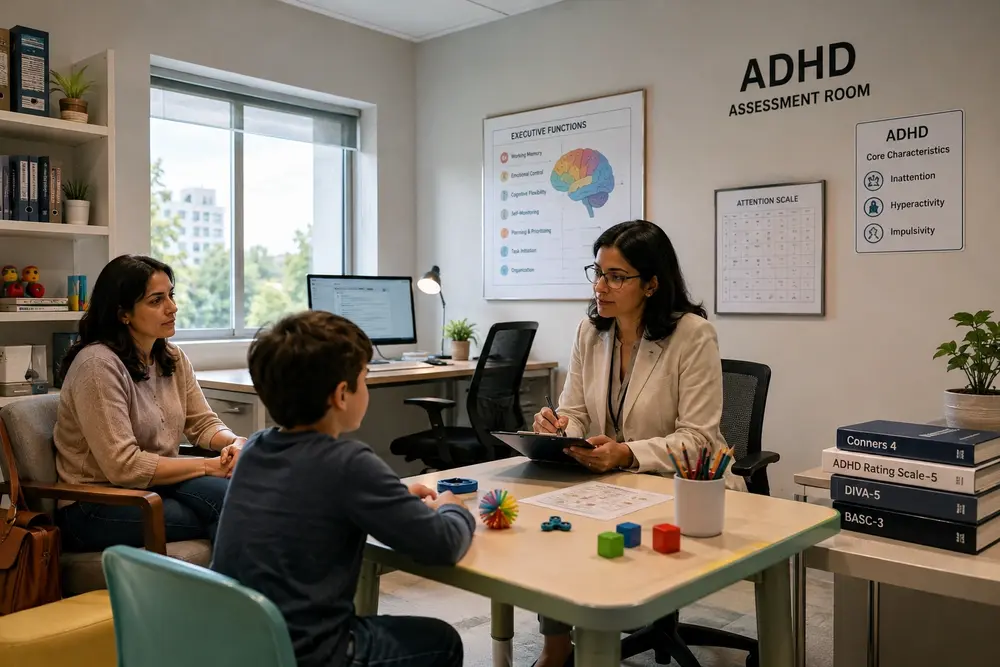


Attention Deficit Hyperactivity Disorder is one of the most commonly diagnosed neurodevelopmental conditions in childhood, and it is also one of the most misunderstood. Many parents who begin to wonder whether ADHD might explain their child’s difficulties are unsure about what getting a professional assessment actually involves, how long it takes, and what a diagnosis will mean for their child’s future. ADHD Assessment for Children in Perth at WA Paeds is a thorough, compassionate process that replaces uncertainty with clarity and gives families a clear path toward the right support. This blog explains the assessment process step by step so you know exactly what to expect.

What ADHD Actually Is and How It Presents in Children
ADHD is a neurodevelopmental condition that affects how the brain manages attention, impulse control, and activity levels. It is not a behaviour problem caused by poor parenting or lack of discipline. It is a genuine difference in brain structure and function that makes certain mental tasks significantly harder than they are for neurotypical children.
ADHD presents in three main ways. The predominantly inattentive presentation involves significant difficulty sustaining attention, tendency to lose things, forgetfulness, difficulty completing tasks, and being easily distracted by irrelevant thoughts or environmental stimuli. The predominantly hyperactive-impulsive presentation involves constant physical activity or restlessness, excessive talking, difficulty waiting, interrupting others, and acting before thinking. The combined presentation involves significant symptoms from both categories simultaneously.
It is important to understand that ADHD looks different in every child. A child with predominantly inattentive ADHD may be sitting quietly in class while mentally absent, struggling to absorb any of the lesson content without any visible disruptive behaviour. This presentation — far more common in girls than is often recognised — is frequently overlooked for years because the child is not causing disruption. By the time the difficulty is identified, significant academic gaps and emotional consequences may have developed.
When Should You Seek an ADHD Assessment
There is no single moment that definitively signals it is time to seek an ADHD assessment. It is usually a pattern of observations across time and across different settings that builds the case. Consider seeking an assessment when:
- Teachers consistently report that your child cannot maintain attention or is significantly disrupting the class
- Your child is falling behind academically despite clearly having the ability to understand and learn the material
- Simple daily tasks — homework, getting ready for school, following a sequence of instructions — consistently result in conflict or distress
- Your child’s emotional reactions seem disproportionate to their age — meltdowns that other children their age moved past long ago
- Social relationships are affected — your child cannot read social cues, speaks out of turn, or struggles to maintain friendships
- You have a persistent sense as a parent that something more than temperament is involved in what you are observing
If these patterns have been present for more than six months, are visible in more than one setting (at home and school, not just one), and are genuinely affecting your child’s quality of life, a professional assessment is the right next step.
Step 1: Initial Clinical Consultation
The assessment at WA Paeds begins with a comprehensive initial consultation between the paediatrician and the family. This is a detailed conversation, not a quick check-box exercise. The paediatrician asks about the child’s developmental history from birth through to the present — covering pregnancy and birth, early milestones, developmental trajectory at different ages, the nature of the current concerns, how long they have been present, and how they manifest at home and at school.
This history provides the essential context that shapes the rest of the assessment. It allows the paediatrician to form an initial clinical impression and to identify which specific assessment components will be most informative for this particular child.
Step 2: Standardised Behaviour Rating Scales
Parents and teachers complete validated questionnaires that rate the child’s behaviour across a range of areas — attention, hyperactivity, impulsivity, emotional regulation, social interaction, and executive function. These questionnaires use standardised scales that allow the child’s responses to be compared to norms for their age and gender.
The teacher questionnaire is especially important because ADHD must be present in more than one setting to meet diagnostic criteria. A child who shows difficulties only at home, or only at school, may have a different explanation for their behaviour. The comparison between parent and teacher ratings also provides valuable information about whether the difficulties are more pronounced in certain types of environments.
Step 3: Cognitive Assessment
Cognitive testing evaluates specific aspects of brain processing that ADHD directly affects. This includes working memory — the brain’s short-term mental workspace that holds and manipulates information while completing tasks. It includes processing speed — how quickly the brain processes and responds to information. It includes sustained attention — the ability to maintain focus over extended periods. And it includes executive function — the higher-order mental skills that manage planning, organisation, starting tasks, and shifting between activities.
This testing serves a dual purpose. It provides direct evidence of the attention and executive function difficulties that characterise ADHD, and it rules out other explanations for the child’s difficulties — such as specific learning disabilities, giftedness with underestimation, or anxiety — that can produce similar-looking presentations.
See also-ADHD Testing for Learning and Attention Challenges in Children
Step 4: Medical Review
A physical health review is integrated into the ADHD assessment at WA Paeds. Several medical conditions can produce symptoms that closely resemble ADHD — thyroid dysfunction, sleep disorders, vision or hearing problems, and certain neurological conditions among them. Ruling these out through appropriate medical review ensures that the diagnosis is accurate and that any co-existing health issues that may be worsening the child’s difficulties are identified and addressed.
Step 5: Feedback Session and Written Report
Once all information has been gathered and carefully reviewed, the paediatrician meets with the family for a comprehensive feedback session. The findings are explained clearly in plain language. The diagnosis — whether ADHD is confirmed, ruled out, or a different condition is identified — is communicated honestly and with sensitivity. Practical recommendations for home, school, and any additional therapeutic support are discussed in detail.
A written report is provided to the family that summarises the assessment findings, states the diagnosis, and lists the specific recommendations. This report is a vital document that can be shared with the child’s school to support educational adjustments, with other healthcare providers, and with any services the family accesses for support.
What Comes After the Diagnosis
An ADHD diagnosis is not a label — it is a key that opens the door to targeted, effective support. Following an ADHD Assessment for Children in Perth at WA Paeds, families can access:
- Educational adjustments at school including extended time in assessments, reduced-distraction seating, chunked instructions, and written reinforcement of verbal directions
- Occupational therapy for executive function skills, organisational strategies, and sensory regulation
- Parent coaching on how to structure routines, deliver instructions effectively, and support a child with ADHD at home
- In some cases, medication — which when recommended by the paediatrician and agreed to by the family can be highly effective in managing ADHD symptoms alongside the therapeutic supports

Conclusion
ADHD Assessment for Children in Perth at WA Paeds is a thorough, multi-step process that gives families genuine answers rather than guesses and a clear, practical path forward. If you are concerned that your child may have ADHD, early assessment is the most important step you can take. Contact WA Paeds today to begin ADHD Assessment for Children in Perth for your child and replace uncertainty with the clarity that makes real progress possible.