

Introduction
Few areas of child health carry as much misinformation as autism. Parents considering an Autism Spectrum Disorder Assessment in Perth 1at WA Paeds often arrive with a head full of conflicting messages — things they have read online, heard from well-meaning relatives, or picked up from outdated school-of-thought ideas that have not kept pace with modern clinical understanding. These myths do real damage. They delay families from seeking help, create unnecessary fear, and sometimes lead parents to dismiss genuine concerns because they do not match the stereotype they have in their head. This blog sets out the most common myths about autism assessment and replaces them with the facts that actually guide good clinical practice.

Myth: Autism Only Looks One Way
Many people picture a very specific child when they hear the word autism — usually a young boy who does not speak and prefers to play alone. This image, while accurate for some children, represents only a narrow slice of the spectrum. Autism presents differently across every child. Some children are highly verbal, achieve well academically, and are motivated to make friends, yet still struggle with the unwritten rules of social interaction or with sensory sensitivities that are not obvious to an outside observer. Others have significant communication challenges and need substantial daily support. Girls, in particular, are often better at masking their difficulties in social settings, which means their signs can be easy to miss without a properly trained assessor looking for the full range of presentations.
Myth: A Diagnosis Requires One Obvious Sign
Parents sometimes wait for a single, unmistakable red flag before seeking an assessment — total non-verbal communication, for example. In reality, autism is identified through a pattern of several smaller signs across social communication, play, flexibility, and sensory processing, not one dramatic behaviour. A child who makes eye contact, who has some friends, and who speaks fluently can still meet the criteria for autism if enough of these other patterns are present together. This is exactly why a structured, multi-component assessment matters more than a parent or teacher’s single observation.
Myth: Assessment Is Just a Conversation with a Doctor
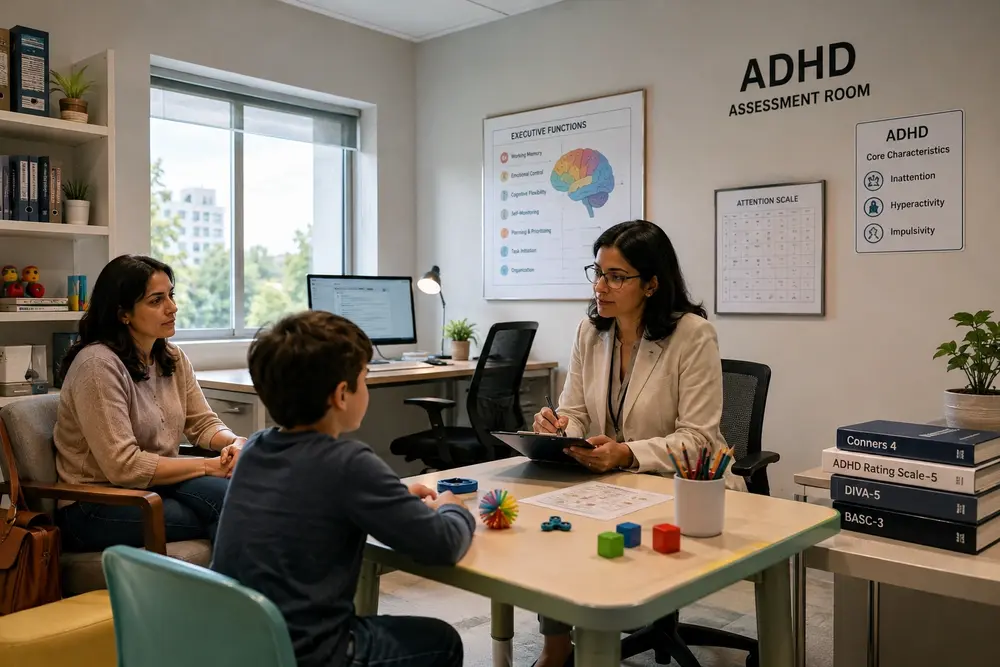
Some parents assume that an autism assessment is a short chat where the paediatrician forms an opinion based on how the child behaves for twenty minutes in a clinic room. A genuine assessment is far more rigorous than this. It draws on standardised observational tools, developmental history gathered across the child’s whole life, and structured input from parents and teachers who see the child in very different environments. A single short appointment cannot capture this, which is why proper assessment takes place across multiple sessions and sources of information.
Myth: Late Diagnosis Means the Opportunity Has Been Missed
Many families worry that if their child was not identified as a toddler, it is somehow too late for a diagnosis to matter. This is not true. While earlier intervention generally produces the strongest gains, autism can be meaningfully identified and supported at any age, including adolescence and adulthood. Older children who are diagnosed later often experience significant relief, because a diagnosis finally explains years of social confusion, sensory overwhelm, or anxiety that they and their families had struggled to make sense of. The right support, whenever it begins, still makes a genuine difference.
Myth: A Diagnosis Is a Negative Label
Perhaps the most damaging myth is that an autism diagnosis limits a child rather than helping them. In practice, a diagnosis is a key that unlocks understanding and access to support — NDIS funding, tailored classroom adjustments, and therapies designed around the child’s specific profile. Families frequently describe the diagnosis as the moment they finally understood their child, rather than the moment they lost hope for them. It replaces guesswork with a clear, evidence-based plan for support.
What an Accurate Autism Spectrum Disorder Assessment Actually Involves
At WA Paeds, an Autism Spectrum Disorder Assessment in Perth combines a detailed developmental history, structured observation using the ADOS-2 (the internationally recognised gold-standard tool), and questionnaires completed separately by parents and teachers. Cognitive and adaptive testing is included where it adds useful clinical information. Each of these pieces is weighed together by an experienced paediatrician, rather than relying on any single source of information in isolation. This is what separates a genuine clinical diagnosis from an online checklist or an informal opinion.
Why Getting Accurate Information Matters
Believing the wrong myth can genuinely delay a child from getting help. A parent who believes autism only looks one way may dismiss real concerns because their child does not match the stereotype. A parent who believes a diagnosis is purely negative may avoid assessment altogether, even when their child is struggling daily with things that support could ease. Replacing myth with fact is often the first step toward a family actually booking the assessment their child needs.

Conclusion
Misinformation about autism assessment causes real, avoidable delays for children who need support. An accurate Autism Spectrum Disorder Assessment in Perth at WA Paeds replaces myth with clinical evidence and gives families a clear, honest picture of their child. If you have noticed signs in your child and have been holding back because of something you read or heard, it is worth speaking to a professional who can separate fact from fiction. Contact WA Paeds today to book an Autism Spectrum Disorder Assessment in Perth and get the accurate answers your family deserves.