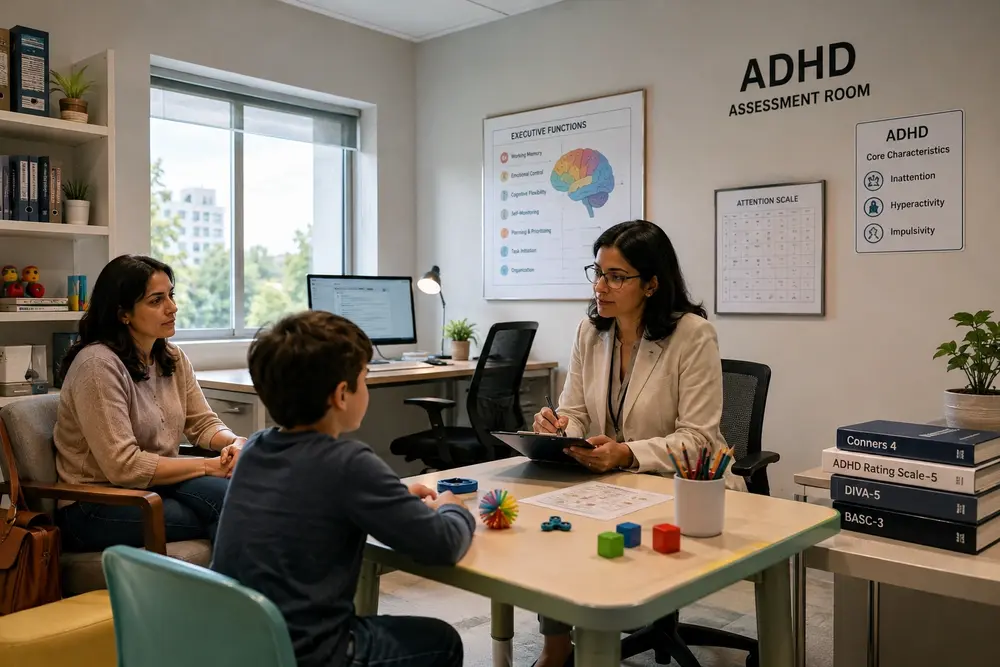


One of the questions parents ask most often is whether it is too soon to seek an autism assessment for their child. The honest answer is that it is almost never too soon when concerns are present. Early identification of autism spectrum disorder consistently produces better outcomes than late identification, and seeking an ASD Assessment in Perth at WA Paeds when you first notice something different about your child’s development is one of the most constructive decisions you can make as a parent. This blog helps parents understand what signs to look for, when to seek assessment, and what the process at WA Paeds involves.

Understanding the Autism Spectrum
Autism Spectrum Disorder is a neurodevelopmental condition that affects how a person communicates, connects with others, processes sensory information, and relates to the world around them. The word “spectrum” is significant — it reflects the enormous variation in how autism presents from one individual to the next.
Some children on the autism spectrum are highly verbal, academically strong, and socially motivated, but struggle with the unspoken rules of social interaction, sensory sensitivities, or inflexible thinking. Others have limited verbal communication, significant sensory processing challenges, and complex support needs across multiple areas of daily life. Many children fall somewhere along the wide range between these two descriptions, with a unique profile of strengths and challenges that makes individual assessment essential for accurate understanding.
Autism is not caused by parenting, vaccines, or diet. It is a neurological difference that is present from birth, even when it is not identified until later in childhood or even adulthood.
Early Signs That May Warrant an ASD Assessment
Parents are often the first to notice that something about their child’s development feels different. Knowing which signs are most strongly associated with autism helps parents make the decision to seek assessment at the right time.
In Babies and Very Young Toddlers (Under 18 Months)
- Reduced or absent eye contact with caregivers during feeding, play, and interaction
- Not responding to their name when called by 12 months
- No babbling by 12 months
- No reaching, pointing, or waving by 12 months
- Limited or absent social smile — not smiling in response to a parent’s smile
- Seeming more interested in objects than people
In Toddlers and Preschoolers (18 Months to 4 Years)
- No single meaningful words by 16 months
- No two-word spontaneous phrases by 24 months
- Loss of previously acquired language or social skills at any age — always warrants urgent assessment
- Limited or absent pretend or imaginative play
- Very strong insistence on specific routines with extreme distress when those routines are disrupted
- Repetitive physical movements — hand flapping, rocking, spinning objects, toe walking
- Very intense, narrow focus on specific objects or topics
- Strong sensory reactions — extreme sensitivity or seeking of specific sensory experiences
In School-Age Children and Adolescents
- Significant difficulty reading social situations, understanding others’ emotions, or adapting behaviour to different social contexts
- Literal interpretation of language — difficulty with sarcasm, metaphor, and figurative speech
- Friendships that are desired but consistently difficult to establish or maintain
- Sensory sensitivities that interfere with daily activities such as wearing certain clothing, eating specific food textures, or tolerating crowded environments
- Very inflexible thinking — significant difficulty when plans change or rules are not applied consistently
When School Raises Concerns
Sometimes it is a teacher or school counsellor who first suggests that an autism assessment might be helpful. This can feel surprising or confronting for parents — particularly if the child’s behaviour at home seems different from what is being reported at school. It is worth taking school concerns seriously. Teachers observe children in structured, social, peer-group environments every day and often notice patterns in social communication and behaviour that are less visible in the one-on-one environment of home.
If your child’s school has raised concerns about their social interaction, communication style, sensory responses, or behaviour, seeking a professional assessment is a reasonable and proactive next step. You do not need to be certain that autism is present to seek an assessment — the assessment process exists precisely to answer the question.
Read more-Benefits of Early Autism Assessment and Intervention for Children
What the ASD Assessment at WA Paeds Involves
An ASD Assessment in Perth at WA Paeds is a multi-component, multi-session evaluation conducted by experienced paediatricians and allied health professionals.
Developmental History Interview
The assessment begins with a comprehensive conversation about the child’s development from before birth to now. The paediatrician asks about pregnancy and birth, the age at which milestones were reached, early social and communication development, how behaviour and development have changed across different ages, and the specific concerns that have prompted the assessment.
Structured Clinical Observation Using the ADOS-2
The ADOS-2 is the internationally recognised gold standard tool for autism assessment. It involves a structured series of activities that create natural opportunities for the child to demonstrate social communication, interactive play, imagination, and emotional response. The assessor observes how the child initiates and responds to social interaction, how they communicate, and whether patterns of restricted or repetitive behaviour are evident. The ADOS-2 produces a standardised score that contributes meaningfully to the diagnostic formulation.
Parent and Teacher Questionnaires
Standardised questionnaires completed by parents and teachers provide information about the child’s behaviour across home and school environments. This multi-informant approach is important because autism can present quite differently across different settings and with different people.
Cognitive and Adaptive Assessment
Understanding the child’s cognitive profile and everyday functional abilities provides important context for the diagnostic picture and for planning appropriate support. This component is included where it adds meaningful clinical information to the assessment.
What the Diagnosis Unlocks
An autism diagnosis is the beginning of a more supported journey, not an end point. Following an ASD Assessment in Perth at WA Paeds, families can access:
- NDIS funding — autism is a primary diagnosis for NDIS access in Australia, providing funding for therapy, equipment, and support services
- Educational support through Individual Education Plans and classroom accommodations tailored to the child’s specific profile
- Speech pathology for communication development — including augmentative and alternative communication where verbal speech is limited
- Occupational therapy for sensory processing, daily living skills, and fine motor development
- Behaviour support using evidence-based approaches that support positive behaviour and reduce challenging behaviour
- Social skills programs designed to build meaningful connection and communication
- Parent and carer training to support consistent implementation of strategies at home
If Your Child Is Diagnosed With Autism
Many families who receive an autism diagnosis describe it as a turning point. For some, it is a relief — a framework that finally explains what they have observed for years and gives them access to the support they have been searching for. For others, the initial reaction is more complex — a mixture of relief, grief, and uncertainty about what the future holds. WA Paeds supports families through all of these reactions with honesty, compassion, and practical guidance on next steps.
An autism diagnosis does not define what a child will achieve. It defines what kind of support they need to achieve it. And the earlier that support begins, the more it can do.

Conclusion
If you have noticed signs that your child’s social communication, sensory responses, or behaviour patterns are different from other children their age, do not wait to seek professional assessment. An ASD Assessment in Perth at WA Paeds provides the thorough, compassionate evaluation that gives your family answers and opens the door to support. Contact WA Paeds today to book an ASD Assessment in Perth — because early understanding leads to early support, and early support changes outcomes.